
2026-09-08

Jogging strollers should be treated as a separate category within a stroller range. Buyers may use them to offer a distinct use case from everyday city or travel strollers, so the product needs a clear position rather than simply looking different.
Before choosing a model, decide what role it will play in your range. It may be a higher-value option for specialist retailers, a focused product for an outdoor-oriented sales channel, or one model within a wider all-terrain selection. The right role depends on your target customer, price position, and the products you already sell.
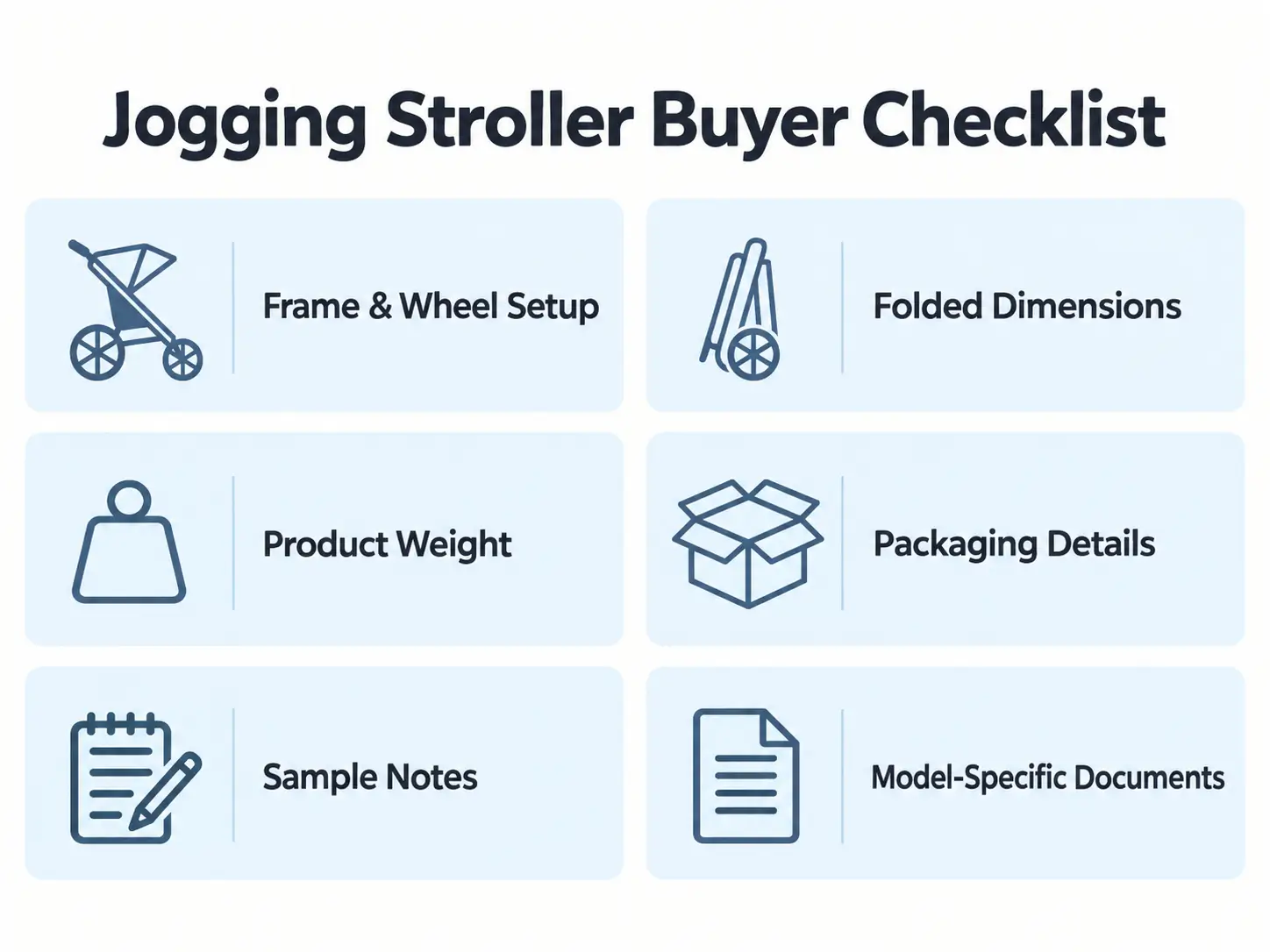
Use consistent comparison points when reviewing jogging-stroller models. Wheel setup, frame construction, folding method, product weight, handling, packaging, and model-specific documents may all affect the buying decision. A clear buying strategy helps you ask suppliers better questions and select samples that match your sales plan.
Before requesting samples, decide where an all-terrain stroller fits within your product range. A clear position makes it easier to choose the right model, prepare product information, and explain the product to retail customers.
Some buyers may want an all-terrain stroller as a higher-value option. Others may need a practical model for more outdoor use. The product position should reflect your target customer, expected selling price, and the level of product support your sales channel can provide.
Avoid selecting a model only because it looks different from existing strollers. Define why it belongs in the range: it may fill a gap between lightweight travel models and larger stroller systems, or give specialist retailers a more focused option for customers with specific needs.
Review your current stroller range before adding a new model. If two products have similar price positions and similar selling points, customers may find it difficult to understand the difference between them.
List each existing model by its main role, such as travel, everyday use, newborn use, or all-terrain use. This helps you see whether a jogging stroller adds a meaningful option or creates unnecessary overlap.
Once the product role is defined, prepare a short brief for suppliers. Include the target market, intended sales channel, preferred product position, and the information you need before reviewing samples. A clear brief helps suppliers recommend relevant models and makes quotations easier to compare.
A product photo can show the overall look of a jogging stroller, but it cannot answer every buying question. Before asking for samples, compare the same details for each shortlisted model. This helps buyers decide which products are worth reviewing in more detail.
Ask suppliers to explain the frame structure, wheel setup, brake system, and folding method for the exact model. These details can affect the product’s intended position and how it will be presented to customers.
Ask for clear folded and unfolded dimensions as well. This information is useful for retail display planning, warehouse storage, shipping discussions, and online product listings.
Product weight and carton information should be included in every comparison sheet. These details help buyers understand the practical side of selling and distributing the model.
If the stroller will be sold online, packaging details can support shipping and fulfilment planning. If it will be supplied through distributors or stores, carton size and packing quantity may also affect the order decision.
When samples are available, use the same checklist for every model. Record questions about folding, handling, materials, packaging, and any information that needs clarification.
Make sure the supplier’s written product information matches the sample you receive. If an item is important to your sales plan, ask the supplier to confirm it for the exact model and configuration being quoted.
Once the key details are clear, buyers can review the Jogging Strollers collection to compare the category before discussing a specific model.
The same jogging stroller may not suit every sales channel. Consider how the product will be displayed, explained, shipped, and supported before choosing a model.
Specialist retailers may use jogging strollers as a focused category for customers looking beyond everyday stroller options. Store teams should be able to explain the product’s intended position and show the key differences between it and other models in the range.
For this channel, a small selection with clear price levels and product roles is often easier to sell than several similar models.
Online sellers need clear product information, accurate images, dimensions, and packaging details. Customers should be able to understand what makes the model different before comparing it with other strollers online.
Ask suppliers for information that matches the exact model being sold. This supports clearer product pages and reduces confusion between models with similar names or images.
Distributors may need models that can work across several retail customers or markets. A practical starting point is to select a limited number of products with clear positions, then expand the range after reviewing sales feedback and supplier performance.
When adding jogging strollers to a broader stroller assortment, see building a wholesale stroller range for a wider sourcing framework.
Review a supplier quotation together with the product information, sample, and supporting evidence for the exact jogging-stroller model. This helps buyers compare offers on a clearer basis and avoid making decisions from price alone.
Use the same comparison sheet when reviewing samples. Check whether the sample matches the product information provided by the supplier, including the model configuration, folding method, wheel setup, packaging, and other details that matter to your sales plan.
If a feature or product claim will be used in sales materials, ask the supplier to confirm it for the exact version you plan to order.
If you need changes to colours, fabrics, packaging, or other defined details, confirm what the supplier can provide before finalising the order. Ask whether the change affects the product information, sample process, or documents required for your target market.
When comparing quotations, make sure each supplier is quoting on the same basis. Confirm the model, configuration, packaging, sample terms, customization scope, and production timing before deciding which offer is the best fit.
Request the documents and quality information needed for your intended market. Requirements can differ by destination and product configuration, so discuss them early rather than assuming that one model’s information applies to another.
For a more detailed supplier-evaluation framework, see how to choose a stroller manufacturer.
The terms may be used differently by different suppliers and markets. Do not rely on the product name alone. Compare the actual model details, including wheel setup, frame, folding method, dimensions, and intended product position.
A focused starting range is usually easier to manage than several similar models. Begin with the model or models that have a clear role in your sales channel. Add more options only when they serve a different price position, customer need, or retail market.
Ask for information that relates to the exact model you plan to review. This may include product dimensions, product weight, folding details, wheel and brake information, packaging details, available customization, sample terms, and model-specific supporting documents. Make sure the sample and quotation refer to the same product configuration.


