
2026-09-08

For importers and retailers, stroller quality control is more than a final inspection at the end of production. It is a way to verify that the approved product specification, packaging, and production output stay aligned from the first confirmed sample through shipment.
Use this checklist to ask for evidence at the stages where mismatches are most costly: before bulk production begins, when changes are made, during production, and before goods are released. The exact checks depend on the model, target market, and agreed order requirements, but a supplier should be able to show how each stage connects to the next.
This guide focuses on the buyer's verification process. It does not replace model-specific testing, target-market compliance review, or an independent inspection where those are needed.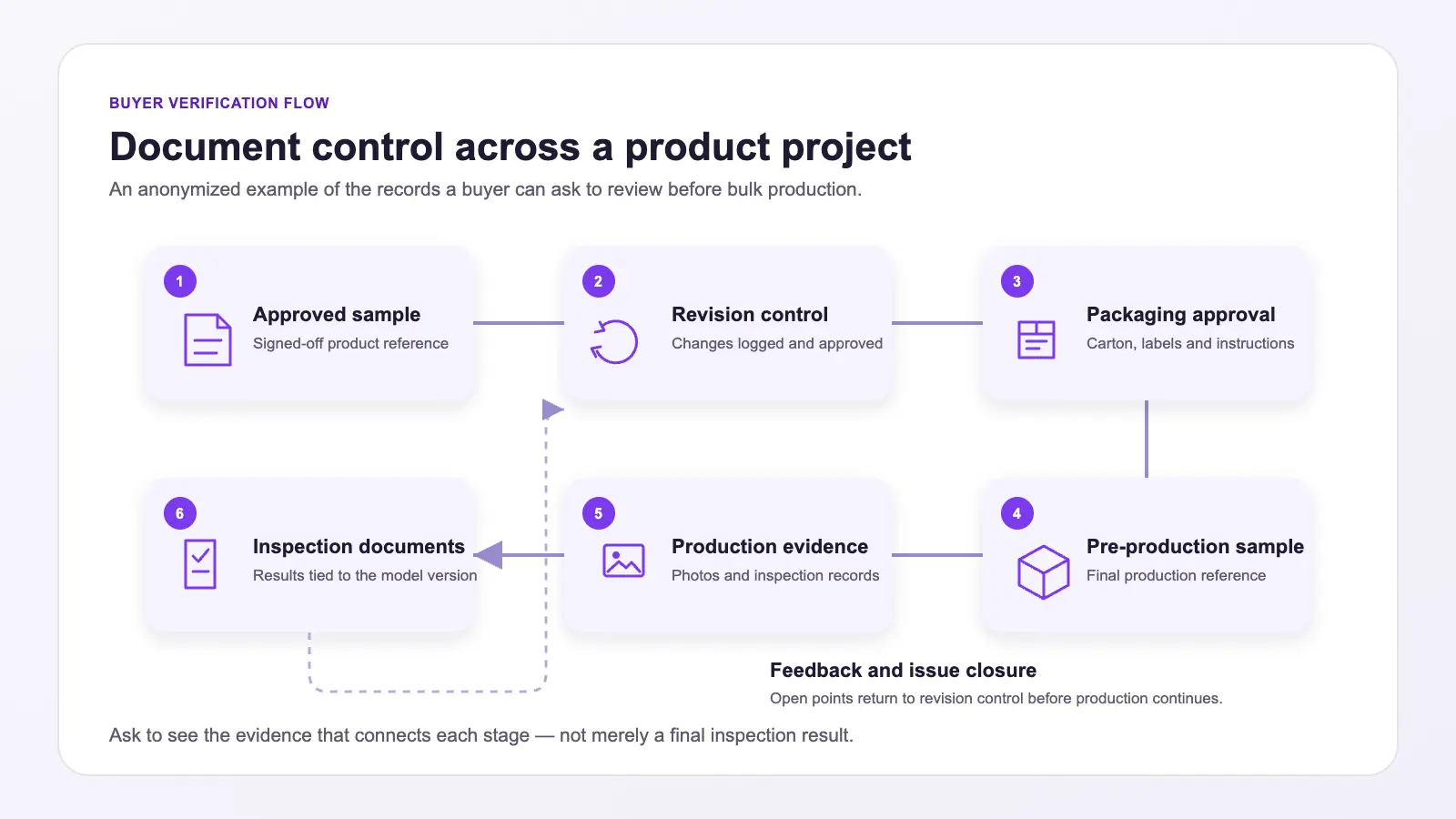
A useful checklist follows the product from the approved reference through bulk production. It should help a buyer answer four practical questions:
These questions matter because a stroller is not one isolated component. A change to a frame, fabric, buckle, wheel, carton, instruction sheet, or accessory can affect the agreed configuration. The buyer should therefore review a connected control process rather than relying only on a final visual check.
Start with the document or sample that represents the exact version to be produced. It should identify the agreed model configuration clearly enough for both parties to compare subsequent production against it.
For how to define, inspect, and document that reference during the sample stage, see our guide to inspecting a stroller sample before placing a bulk order.
For an OEM or private-label project, the approved reference should be confirmed before production tooling, materials, or packaging are finalized. Buyers planning that type of project can also review working with an OEM stroller manufacturer to understand the earlier supplier-selection and project-definition questions.
One of the most useful quality-control questions is not simply “Will you inspect the goods?” It is “How do you keep the approved product version aligned with the version being produced?”
Ask the supplier to explain how it controls approved samples, modification records, packaging files, and pre-production references. A workable process may include an approved sample, documented revision history, packaging confirmation, a pre-production sample, production-reference photos or records, and inspection documents tied to the current model version.
This does not mean every buyer needs every internal file. It means the supplier should be able to provide appropriate evidence for the stage and scope of the order. When evaluating supplier evidence, review the available quality management and testing approach alongside the model-specific documents offered for your project.
Production-stage checks help identify a recurring issue before it affects the full order. The buyer does not need to dictate a factory's internal workflow, but should agree on what will be checked, when the buyer will receive an update, and how nonconforming items will be handled.
Define the evidence you need before production starts. Depending on the order and supplier arrangement, this may include progress updates, photos of specified checkpoints, inspection records, or a defined opportunity to review a pre-production sample. Avoid treating generic factory photos as proof that the particular model and version on your purchase order have been checked.
Pre-shipment review is the final opportunity to compare the order with the approved requirements before goods are released. It should be based on the actual bulk order, not only on a development sample or a previous production run.
A passed inspection does not remove the need for clear order terms. Buyers should agree in advance how rework, replacement, credit, or other remedies will be handled if an issue is identified.
Quality control and compliance review overlap, but they are not the same task. A clean finish, working fold, and complete carton do not demonstrate that a stroller is suitable for every market. Requirements can differ by destination, product configuration, labeling, and the documents required for that particular model.
Before committing to a market, ask for the relevant model-specific information and confirm what still needs to be reviewed. Do not assume that documents for one configuration, country, or production period apply automatically to another.
Use these questions to keep the conversation practical:
Good stroller quality control is visible in the connection between decisions and evidence: an approved specification, controlled changes, confirmed packaging, production records, and a final review of the actual goods. For buyers, that connection makes it easier to compare supplier offers, identify unanswered risks, and decide what must be confirmed before payment or shipment release.
Ask suppliers to explain the process for your exact model and target market, then keep the agreed references attached to the order record. That approach gives you a more reliable basis for a bulk-order decision than a general assurance that quality will be checked.


