
2026-09-08

Retailers building a baby feeding category are not simply choosing individual products. They need a range that fits their sales channel, target customer, and budget—without creating unnecessary overlap. A clear product structure helps buyers compare supplier offers, set sensible priorities, Every item in your baby feeding supplies should earn its place against that structure. and build a category that can develop over time.
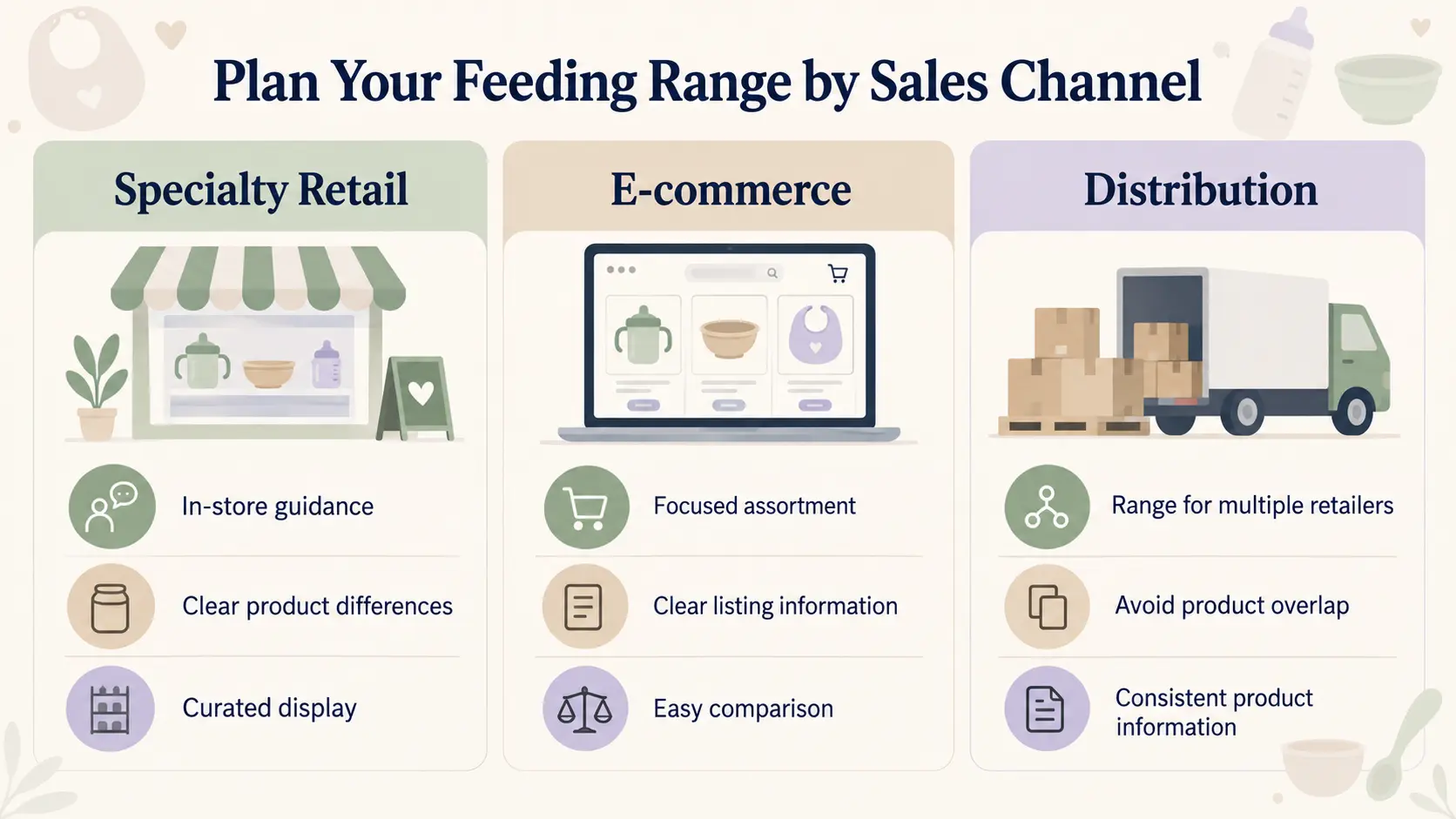
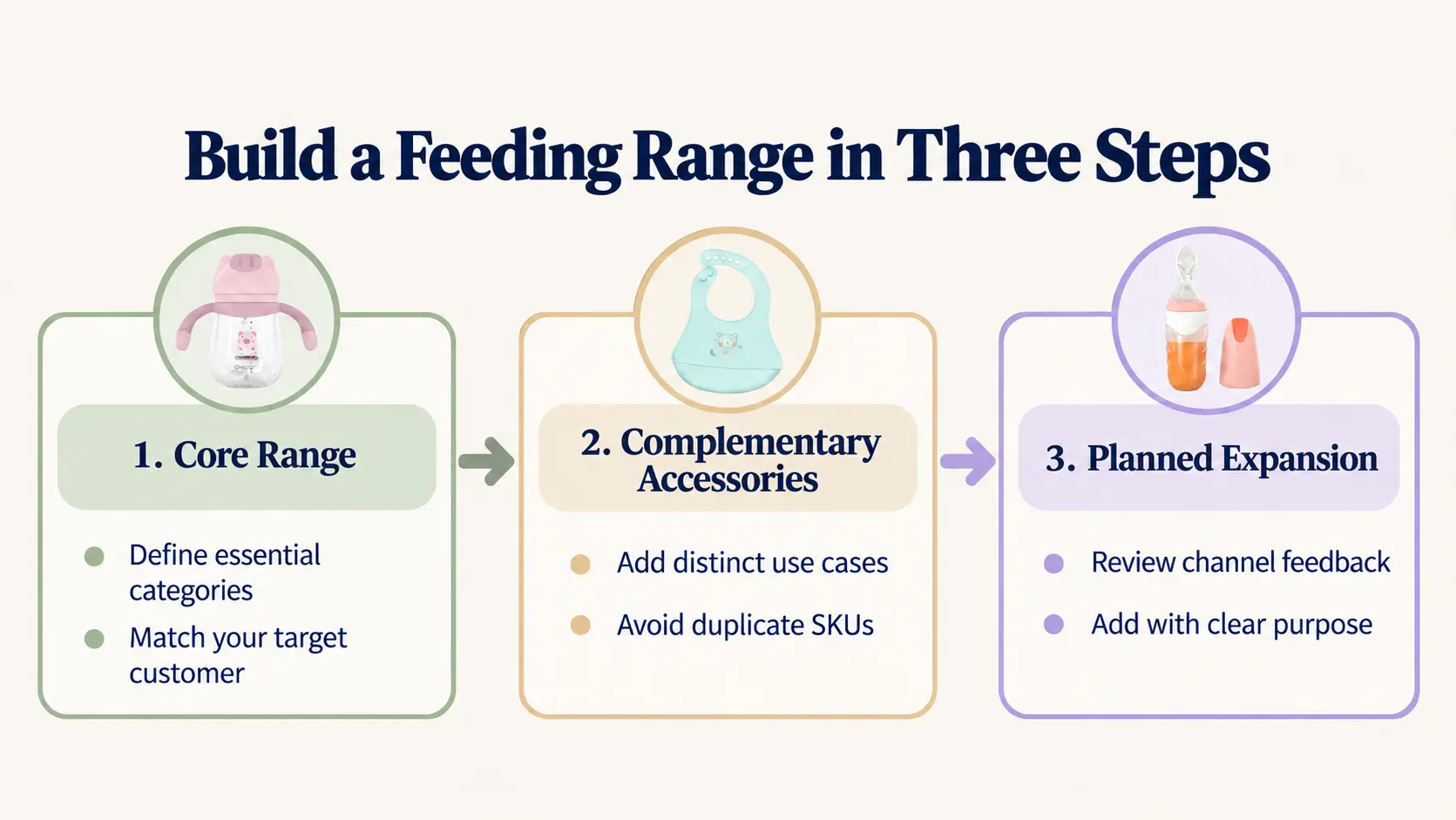
Once the sales channel and customer are clear, identify the products that form the essential part of the category. The goal is not to offer every possible variation at launch. It is to create a coherent selection in which each product has a clear place and does not merely duplicate another option.
A useful approach is to group potential items by their role in the overall feeding routine, then decide which groups are essential for your target customer and which can be added later. This helps retailers build a more intentional range of baby feeding products, rather than purchasing a disconnected list of items from a supplier catalogue.
When the core range is defined, buyers can review wholesale baby feeding products by category and compare which product types best match their planned assortment.
Accessories should support the core range rather than distract from it. The right baby feeding accessories can help retailers create useful combinations, offer lower-commitment add-on purchases, and give customers more reasons to return to the category. However, accessories should be selected because they add a distinct use case or complement a core product—not simply because they increase the number of SKUs.
When evaluating baby feeding supplies, consider how easily each item fits with the rest of the range. Ask whether it serves the same target customer, suits the same price position, and can be presented clearly alongside the products it complements. This keeps the category easier for customers to understand and easier for the retailer to manage.
For a first launch, it is often better to begin with a focused selection of core products and a small number of relevant accessories. Additional options can be considered once the retailer has clearer feedback from the channel, customer enquiries, and product performance.
A useful range gives customers clear choices without making the category difficult to navigate. Retailers should consider whether each proposed product serves a distinct need, price position, or sales channel. If two items appear to solve the same problem for the same customer, carrying both may create more complexity than value.
This is particularly important when comparing supplier catalogues. A larger selection can look attractive at first, but it may include minor variations that are hard to explain online, difficult to merchandise in store, or unlikely to justify a separate purchase decision. Start by setting a clear role for each product, then add alternatives only when they give the customer a meaningful reason to choose one option over another.
Price structure also matters. A focused range may include accessible entry options alongside products positioned for customers seeking different features, materials, or styling. The objective is not to cover every possible price point immediately, but to build a range that feels complete for the intended channel and can be expanded with purpose.
Before confirming a wholesale order, buyers should move beyond the product list and review the practical details that affect whether the range can be sold successfully. When sourcing baby feeding supplies in bulk, confirm the configuration, packaging, and market-specific documents for each item—not just the headline products. This includes confirming the intended market, product configuration, packaging requirements, available product information, and any model-specific documents needed for that market.
Samples can help buyers assess whether the product fits the planned range, while clear product information helps retailers prepare listings, merchandising materials, and customer-facing descriptions. If a buyer has particular branding, packaging, or product-development requirements, these should be discussed early rather than added after the product selection is already final.
Commercial details also need to be confirmed directly with the supplier. MOQ, production timing, payment terms, customization scope, and shipping arrangements can vary by product and order. A practical sourcing plan records these questions before an order is placed, so the buying team can compare options on more than appearance or unit price alone.
Start with the products that best fit your target customer and sales channel. Build a focused core range first, then use complementary products and accessories to strengthen the category once the basic assortment is clear.
Give each product a defined role. Compare products by customer need, price position, intended channel, and the reason a shopper would choose one option over another. If that reason is unclear, the product may overlap with an item already in the range.
High chairs may be a relevant addition when they fit the retailer’s customer profile, available selling space, and price strategy. Buyers considering this category can review wholesale high chairs alongside the wider feeding assortment.
Confirm the product details relevant to your market, packaging and product-information needs, samples where appropriate, and the supplier’s commercial terms. Do not assume that requirements or terms are identical across every model or order.
Baby feeding supplies are the individual products—bowls, cups, bibs, utensils, and accessories. A product range is the planned assortment of those supplies: which items you carry, how they fit your channel and customer, and how they work together. For a single-category deep dive, see our silicone feeding set wholesale guide.
A well-planned baby feeding category begins with a clear view of the sales channel, target customer, and role each product will play in the range. By defining core products first, adding accessories selectively, and checking sourcing details before ordering, retailers can make more deliberate purchasing decisions.
The strongest range is not necessarily the largest one. It is a selection that is easy to understand, suitable for the intended channel, and structured so that future additions have a clear purpose.


